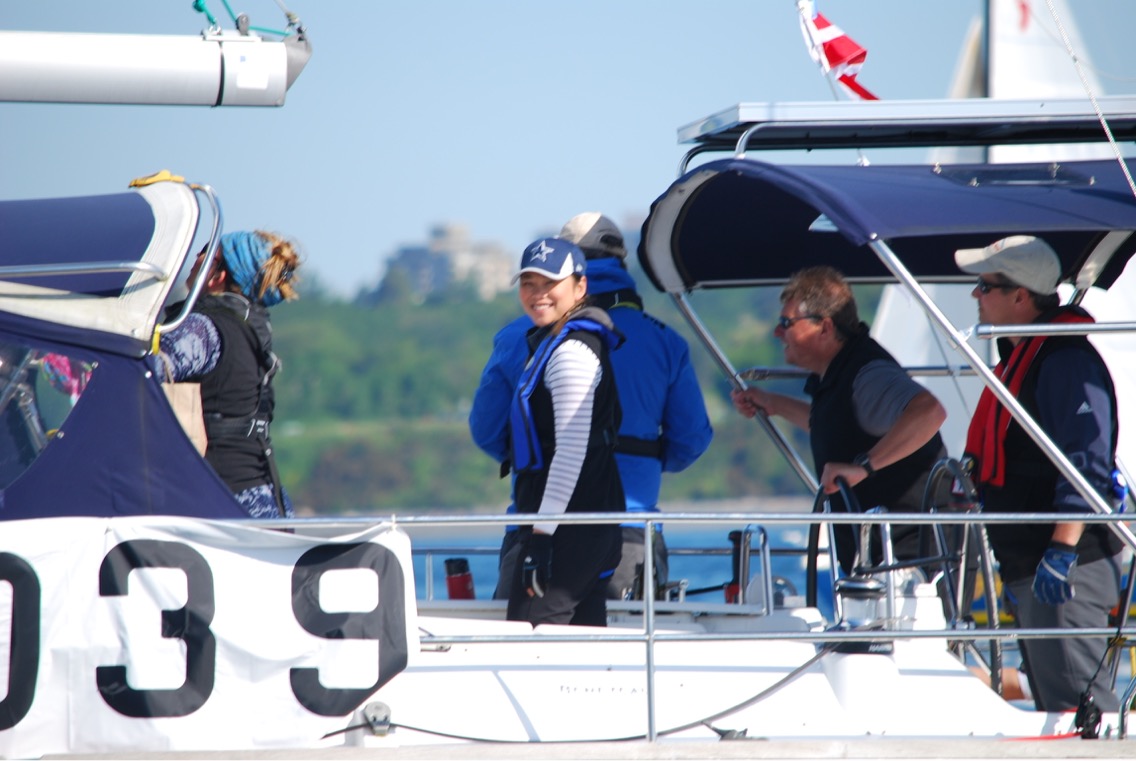

Why Docking Feels So Hard for Most Boaters
Docking is one of the biggest hurdles for most boaters—not because it is the most technically complex maneuver, but because it exposes everything else: preparation, communication, leadership, and the ability to stay regulated when there is no room for delay.
- Your preparation.
- Your communication
- Your leadership.
- Your ability to stay regulated and your crew aligned under pressure.
Many boaters believe docking confidence comes from repetition. It doesn’t. Repetition without awareness simply reinforces anxiety and bad habits. True
docking confidence comes from preparation, communication and command.
Docking in close quarters becomes easier when boaters focus on preparation, communication, vessel control, and early decision-making. Most docking problems are not caused by the dock itself, but by rushed approaches, unclear crew roles, poor situational awareness, and delayed adjustments in wind, current, or tight marina spaces.
Quick caveat: This is not a step-by-step docking guide. If you want hands-on instruction, we offer on-water training designed to build real close-quarters confidence.
Most Docking Mistakes Happen Before the Dock
Before the boat ever enters the marina, confident skippers are already leading the outcome. They have:
- Received their slip assignment and marina layout
- Prepared lines and fenders
- Briefed the crew with clear roles and instructions
- Assessed wind and current – testing conditions before entering tight spaces
- Identified escape routes
Your goal in close-quarters is simple: you and your crew respond according to a plan—not in reaction to chaos.
What Successful Docking Actually Looks Like
Successful docking is:
- No injuries
- No damage
- Physical and emotional safety for everyone on board
Everything else is debrief.
Your Only 2 Goals
A. Get to the dock without damage or injury.
B. Learn something new for next time.
Need to try again? That’s not failure. That’s good seamanship, judgment and decision-making.
Feeling nervous? Normal.
People watching from the dock or other boats? Ignore it. Anyone with real experience knows docking isn’t easy – and they are rooting for you (trust me).
The Skipper’s Mindset™ Docking Framework
Docking doesn’t require perfection – it requires focus on what actually matters. This framework keeps you in control – in command – when conditions, crew and environment don’t go as planned. It is built on 3 elements:
3 Stages of Docking
3 Things You Can Control
3 Keys to Docking Success
3 Stages of Docking
Whether arriving or departing – the stages are the same.
1. Preparation (ALWAYS first)
This happens at the dock before you untie the first line or outside the marina, in an open space. Preparation takes as long as it takes to ensure everyone knows the plan, the cockpit is clear of distraction and the lines and fenders are ready.
Good skipper’s manage expectations. Let your guests know that we will spend time at the dock preparing ourselves and the boat. Set an expectation with yourself that you won’t rush to get into the marina – success will follow when you and you crew are both ready.
2. Movement in the Marina & The Power of the Pause
The helm needs to perform the following key maneuvers:
- Holding (Station-keeping)
- Stopping
- Pivot Turns (Spinning the boat 360 in tight quarters)
- Control in Forward & Reverse
The core questions facing the helm are:
- Where do you want to go?
- How will you get there?
- Is the boat is doing what YOU planned?
The answers come from allowing the boat to pause between large movements and testing conditions in areas where there is more open space:
- Do you need more or less throttle?
- Will the current or wind going push you the wrong way?
- Do you need a full reset or just an adjustment?
Pro-Tips:
- Speed is only as much as needed to maintain steerage and control.
- Neutral is your friend. Allow a pause to keep speed under control and ascertain the direction of your momentum.
- Watch the dock – when alongside, the dock will tell you more about your crew’s ability to step off, speed and proximity to the dock than looking over the bow.
Communication in Motion
- At the helm: Focus on control – do you have it or will wind, current, traffic or space constraints require a reset?
- At the lines: Provide clear, relevant, audible information. And stick to the plan.
- Everyone: Be sensitive to the focus required of each person’s role.
Examples: Audible, Relevant Communication. Phrases like: “A log is in the water at 1 o’clock” – “Do you see the anchor sticking out on the port side?” – “Our slip is after blue sailboat: – are clear ways to communicate to the helm without having to lose focus.
Yes – “Thank you” goes a long way.
3. Dockside Boat Management – Crew Safety is #1
Clear communication is key – acknowledging orders and actions help ensure clarity: “Release the mid-ship” – “Released”.
When departing:
- Lines released in the agreed order. (We use a blue line for our midship – which we always secure first).
- Use the cleats or rail for mechanical advantage – give the lines “a wrap”
When arriving:
- The crew steps off when they feel safe to do so. No jumping.
- Use a fender (not hands or feet) if you’re about to touch another boat.
- If it’s not safe – try again (it’s that easy).
Helm stays in control – always ready to use the engine to maintain the position.
Guiding Principle: No one is ready until everyone is ready.
3 Things You Can Control While Docking
Las Vegas rules don’t apply. Docking isn’t gambling. You’re not playing the odds. You are reducing variables.
1. Quality of Communication
Clarity reduces chaos. When your crew understands the plan and have time to ask their questions, they become a stabilizing force – not additional variables.
2. Prioritize Your Risks.
Not all risks are equal. Crew safety > Everything. Fiberglass can be repaired. Sometimes you have to choose between two bad options – knowing what you want will help you make the right choice when the time comes.
Good skippers: (1) slow down (internally, focusing moment-by-moment), (2) stay aware and (3) abort early.
And if needed – ask for another slip.
3. Reset Speed
The best skippers reset quickly – they can do so because they: (1) Plan their exits, (2) expect the unexpected and (3) abort early.
Docking is not a test of perfection. It is a test of command over yourself and your environment.
Guiding Principle: Trade Big Problems for Small Problems.
3 Keys to Docking Success
1. Situational Awareness: More than wind direction – situational awareness includes:
- traffic
- hazards in the water or on the docks
- crew positions or confusion
- people on the dock who do something unexpected
- changing conditions
We call these unexpected moments “Wild Cards” – and one can be thrown at you at any moment. You can’t avoid them. You can’t wish them away. What do you do? You prepare for them by making sure when one arises, your crew can respond to it and go back to the plan.
2. Vessel Control: Control comes from one question: Is the boat doing what I planned? If not – adjust early.
3. Teamwork: Docking is a team sport. Effective teams have 3 key qualities:
Understand the difference between roles and responsibilities. Skippers are always responsible for the safety of the boat and crew – which includes making sure their crew is ready to perform their tasks. Skipper’s are not always at the helm. Crew members perform the tasks assigned and must take responsibility to speak up if they don’t understand what to do.
Empathize with the pressures of each role. Helm and line-handling are distinct roles with different pressures each team member should seek to understand. There is no hierarchy. Your skills, teamwork and communication will greatly improve when you understand how to do both roles. Sensitivity to one another’s pressures will help you communicate better and provide the clearest, most relevant information to one another.
Prioritize Crew Alignment. Trust with a team is built over time – it can be torn down in moments. Remember, successful docking is simply: No one got hurt. Nothing got damaged. Everything else is something to unpack in your debrief. Making the time to plan, ensure that everyone is ready and create a safe space to debrief will help you build that trust.
What’s Next?
April 25-26 Skipper’s Mindset 2-day Seminar at Brentwood Bay Resort – Limited to 25 people – Tickets on Sale Now
Group Courses on Power & Sail – Visit our Calendar for Dates and Details
Private 1:1 Trainings Available – Contact us to schedule time on your boat at your marina – info@thevoyagemakers.com
If you’re not a newsletter subscriber – subscribe now to download Chapter 1 – Tools for Boat Owners and Chapter 2 – Docking Framework from our Skipper’s Mindset™ series.